
Furniture, Finishes and Materials

When thinking about the design, colour palette, choice of materials and furniture a personal and emotional approach was taken to the process, considering the attributes which are widely thought of as coming together to create feelings of ‘home’.
The aim was to create a meaningful and tangible environment which had layers of interest, texture, and character. Children First were drawn to the Scandinavian aesthetic and knew that they wanted the Bairns Hoose to feel welcoming, cosy and ‘homely’ but that it was important that the different spaces in the Bairns Hoose had the flexibility to be ‘dressed’ or paired back to a simpler scheme, free from visual noise for any children or young people who are neurodivergent. Home is an individual concept which means many different things to different people, so the design team drew on commonly acknowledged positive aspects of a home. In particular, Children First and partners wanted to convey feelings of shelter, safety, warmth, comfort and calm. Even if children & young people coming to Bairns Hoose do not have positive associations with their own homes, it is hoped that their time in Bairns Hoose will allow them to experience the feelings of calm, comfort, and safety which are widely considered to be the attributes of home.
Image credits: Lee Boyd Architects and Will Scott Photography
The team were mindful of avoiding the introduction of objects, smells, patterns or colours that could be considered overwhelming or triggering and utilised a neutral palette of materials. Nothing was introduced that was heavy or oppressive. A neutral, calming tone was chosen for the walls – a soft white that was clean, fresh and had lightness. To add interest a warm, soft greyish blue was used in the recovery room as a highlight colour.
Soft, warm blues, teals and soft greys were chosen for the upholstery with smaller objects such as footstools and small armchairs picked out in a sunflower yellow. A cushion-backed, timber effect vinyl flooring was used in many of the rooms in the house to give the warm and calming appearance of wood, while also offering the durability and maintenance properties required for the operational side of the house.
To flood the building with natural light, where feasible, links were created to the garden using bi-fold doors in the recovery room and fully glazed doors at the entrance and corridor link to the court room and garden space.
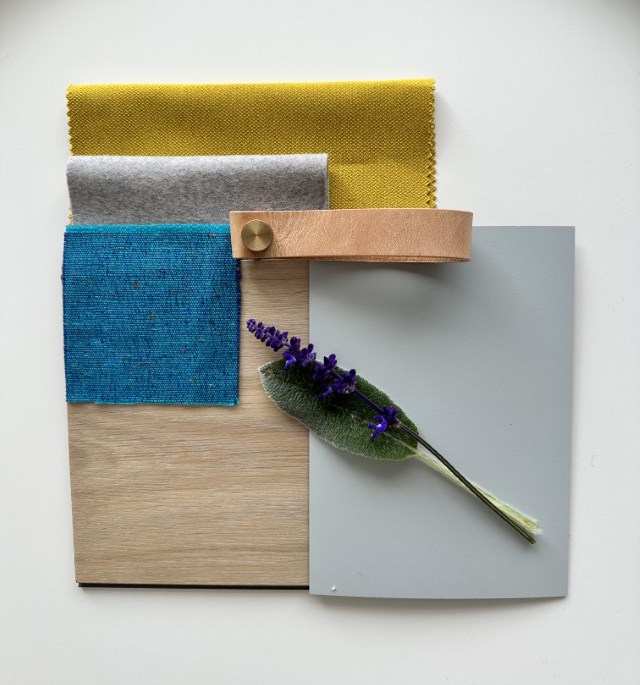
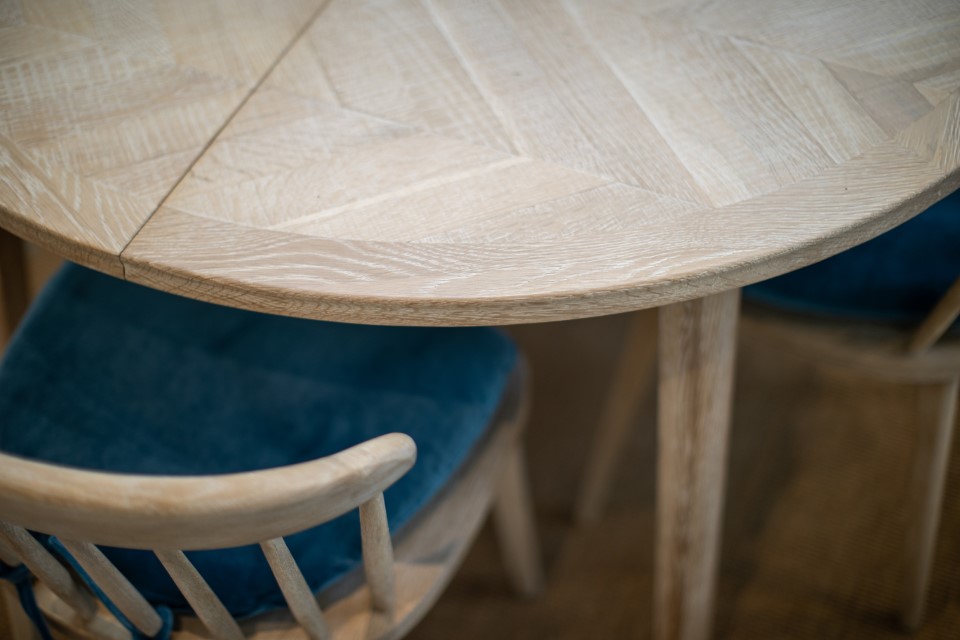
Materials were chosen to promote wellbeing wherever possible. Wood is a living, natural material, so oak tables, chairs and coffee tables were chosen and on any upholstered furniture an oak leg was selected. The doors were finished in a paler ash veneer to avoid the wood feeling too ‘heavy’ and dominant.
When it came to sourcing furniture for the project, curved profiles and soft edges were selected to create a human, homely feeling and aesthetic. This included deep sofas with curved backs where people could sit side by side, small armchairs for individual seating and floor cushions for a more informal approach. Large cocoon-like chairs were chosen for children and young people to curl-up in and feel enclosed and a seating nook within a bespoke storage piece was incorporated for a bit of fun.
For relaxation, rocking chairs were added in some of the rooms. Rocking is a self-soothing skill and the repetitive action of rocking helps to calm the mind. Sheepskin throws were draped over chairs to create the feeling of a cosy embrace. Knitted blankets and throws are used heavily across the rooms for warmth, some tucked into woven baskets and others arranged casually across sofas and armchairs to add further layers of texture, softness, and comfort. Interest was created with illustrated ‘face’ cushions. The different faces depicted on the cushions are representative of many different groups with the intention of promoting a feeling of inclusivity. Care was taken in the selection of specific designs to avoid any which might feel threatening.
Velvet cushions with contrasting piped edging and cushions with large circular wooden buttons, pom poms and tassels add comfort and colour and can also serve as something to hide behind or occupy fidgeting hands. Hanging mobiles in some rooms add some movement and interest at ceiling level. To re-enforce the concept of home, house-shelves were introduced in each of the rooms, inspired by the Childhood Haus in Berlin. Soft, colourful drapes were fabricated using Bute alchemy fabric, is a Scottish wool fabric with subtle coloured, textured flecks & a contemporary take on a traditional tweed. This fabric is used in various colours in conjunction with sheers to help with screening, privacy & add another layer of comfort. Thick rugs were used in rooms to add comfort, warmth and a soft surface to sit or play. Colourful wool felt ball rugs were added in the interview room to create softness and texture.
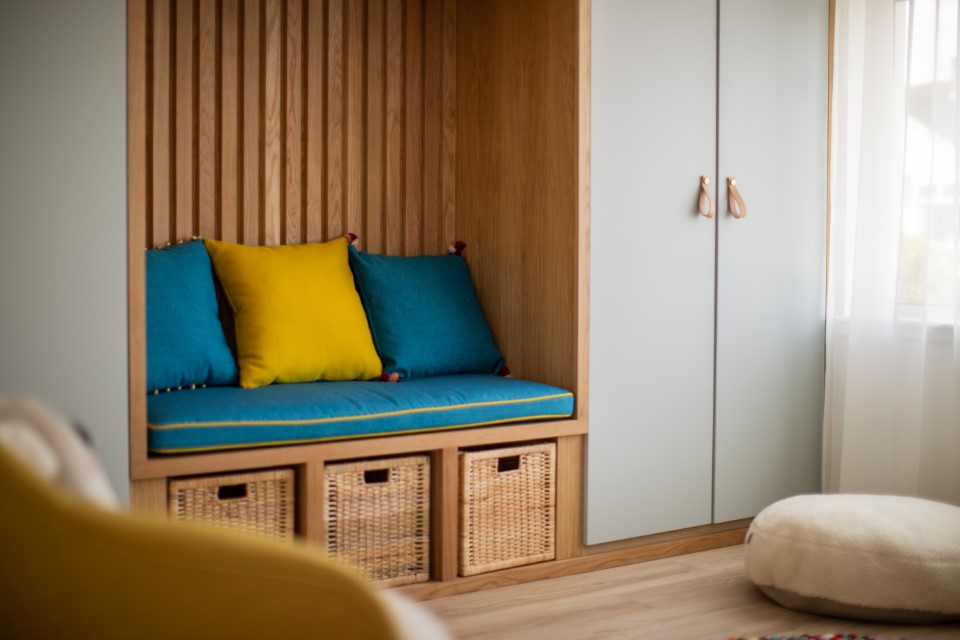
Each room has a slightly different aesthetic and loose items are interchangeable so that the rooms can be dressed or paired back to suit the requirements of the children or young people who are using the spaces. Most of the rooms are square or rectangular with simple plasterboard ceilings and walls, so bespoke built-in furniture was designed for one of the welcome rooms and the court room to create storage, serve as a focal wall and add interest to rooms lacking any form of decorative or ornate details. Slatted, acoustic timber panelling was used in the office, court space and interview spaces as part of the soundproofing measures while also delivering a subtle layer of texture. House plants in various sizes are dotted throughout the house to add greenery & a link with the garden. Lighting in all of the rooms is provided by way of ceiling fixed dimmable spotlights to create an even spread of light and reduce shadows. Floor lamps and small portable lamps create low level ambient lighting more akin to a home.